








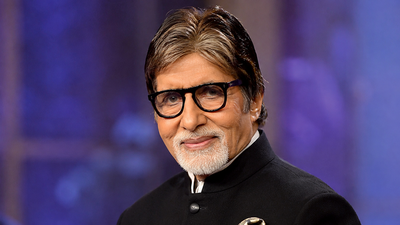
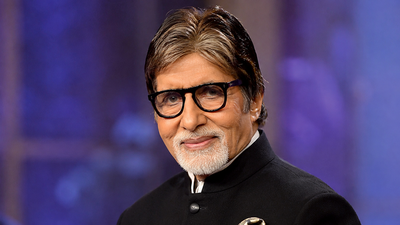
Amitabh Bachchan says ‘Namaskaar’ carries deep cultural, spiritual, and social meaning, and he recalled how the folded-hand Indian greeting found wider acceptance across the world during the COVID-19 pandemic. The actor said the gesture became a safe and respectful alternative to handshakes in 2020, when people avoided physical contact. He also explained how the greeting connects to Indian tradition, faith, humility, and respect.
Amitabh Bachchan on Namaskaar tradition
According to IANS, Amitabh Bachchan shared his thoughts on his blog and wrote, “The folded-hand gesture known as Namaskaar, Namaste, or Anjali Mudra is one of the oldest and most meaningful forms of greeting in the Indian cultural and spiritual tradition.”The megastar also explained the Sanskrit meaning of Namaste. He said the word “Namaste comes from Sanskrit: ‘namah’ meaning ‘bow’ or ‘salutation,’ and ‘te’ meaning ‘to you.’ Thus, it literally means, ‘I bow to you.’”Bachchan said thinkers have looked at the gesture in different ways. He wrote, “Researchers and spiritual thinkers have interpreted the gesture in several ways. In Hindu philosophy, the joining of the two palms symbolizes the union of the individual self with the divine, or the meeting of mind and heart.”
Namaskaar became global during COVID
The actor also pointed to the role of yogic traditions. He said they describe the folded-hand gesture “as balancing the left and right hemispheres of the body and mind. In Buddhism and Jainism, the gesture reflects humility, peace, and respect for all living beings.”Bachchan then underlined the practical value of Namaskaar in social settings. “Anthropologists also note its social value: unlike a handshake, Namaskaar does not require physical contact, making it hygienic and universally respectful,” he wrote.He connected that point to the pandemic years and said, “During the COVID-19 pandemic, many world leaders adopted it as a safe greeting. The gesture is also found in temple sculptures, classical Indian dance, and ancient texts, showing its continuity across thousands of years.”Bachchan added that Namaskaar goes beyond a greeting and reflects reverence, equality, gratitude, and recognition of another person’s sacred presence. He also expressed respect for his Ef, his extended family of fans, and praised their devotion, dedication, peace, and calm.