





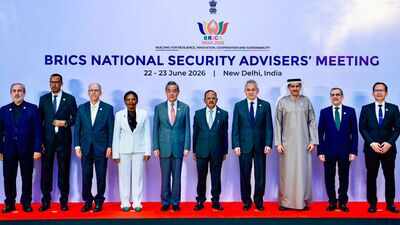
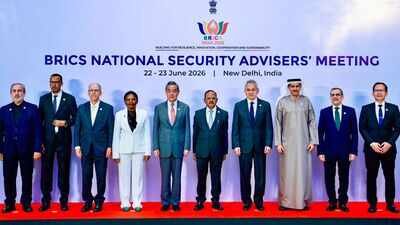
New Delhi: PM Narendra Modi met NSAs and senior security officials from BRICS nations on Tuesday, highlighting the group’s enhanced role in tackling today’s global security challenges.During the interaction, PM Modi said BRICS is a key platform for strengthening security cooperation at a time of rapid global change. He called on member nations — Brazil, China, Egypt, Ethiopia, India, Indonesia, Iran, Russia, Saudi Arabia, South Africa and the UAE — to boost collaboration and tackle shared vulnerabilities. In a post on X, the PM reiterated India’s commitment to its chairmanship agenda, which focuses on “Building for Resilience, Innovation, Cooperation and Sustainability”.“In a changing global landscape, BRICS has a vital role in deepening security cooperation and addressing shared challenges, from terrorism and cybersecurity to emerging technologies. India’s chairmanship will seek to advance practical cooperation, support the priorities of the Global South and contribute to a safer, more secure and inclusive world,” Modi posted.In his televised opening remarks at BRICS NSAs’ meeting, NSA Ajit Doval, speaking about the impact of “geopolitical uncertainties and economic strains”, underlined the need for the grouping to play a more significant role in addressing the challenges. Hailing BRICS as a “very special coalition”, Doval expressed elation over its growth.He welcomed the US-Iran MoU on ending hostilities in West Asia, saying it will stabilise global energy security. “The opening of the Strait of Hormuz is a very welcome development. It will remove supply chain bottlenecks and (address) shortages in sectors like fertilisers and chemicals,” he said.“We are meeting at a very tumultuous time. The world is facing geopolitical uncertainties, economic strains, and disruptive technology. Not only are the threats compounding, but the instruments and institutional mechanisms are increasingly finding themselves inadequate to resolve or mitigate these conflicts,” Doval said, adding “multilateralism is on the decline.” Against a backdrop of “increasing geopolitical uncertainty”, the talks focused on non-traditional threats like terrorism, cybersecurity and risks from emerging technologies.