









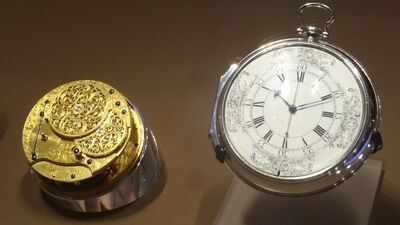
The first clockmaker did not have to guess what time it was. Long before gears, wheels and moving hands appeared, people had already learned to track the passage of a day by watching the Sun, Moon and stars. Sundials, water clocks and other simple devices gave earlier societies ways to divide the day and organise daily activities. Mechanical clocks arrived much later, building on those older ideas rather than creating the idea of time from scratch.As ‘M.S Rau’ reports, early timekeeping devices existed thousands of years before dependable mechanical clocks appeared in medieval Europe. The Clemson University paper titled ‘Model of a Mechanical Clock Escapement’ likewise shows that the development of the mechanical clock was a gradual process, with makers refining ways to turn familiar measures of time into mechanical movement.
How was time measured before mechanical clocks
The earliest clockmakers inherited a system that had already been developing for thousands of years. People observed natural patterns, especially the movement of the Sun across the sky. A shadow cast by a fixed object could show where the Sun was in the day, while the changing position of the Sun and stars helped people recognise longer periods such as seasons and years.According to the Clemson University paper, early timekeeping methods included sundials and water clocks. A water clock measured the passage of time through the steady movement of water into or out of a container. These devices were not perfect, but they gave people a practical way to divide time into manageable periods.The M.S Rau similarly reports that sundials were among the earliest known timekeeping devices, with examples appearing before 1500 BCE. Ancient societies, including the Egyptians, also studied celestial bodies to develop more systematic ways of tracking time.
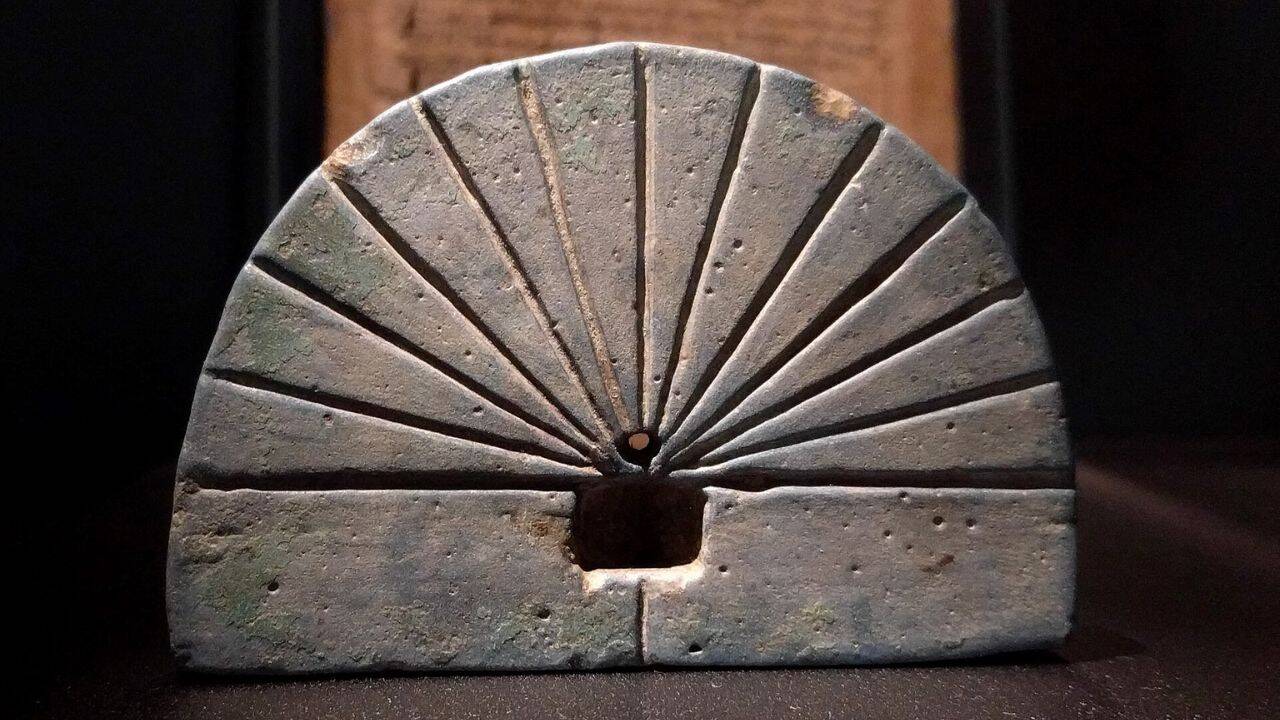
An Ancient Egyptian sundial. Image Credit: Rudolphous/Wikipedia
Did the first mechanical clock simply copy a sundial
No, the important change was that mechanical clocks began producing their own regular movement instead of depending directly on sunlight or the flow of water. The Clemson University paper explains that what separates a mechanical clock from earlier devices is the use of an ‘escapement.’ In simple terms, this part controls the movement of the clock’s gears, allowing them to advance in measured steps rather than turning continuously.There is some disagreement over which device should be called the first true mechanical clock. The Clemson source points to Chinese engineer and scholar Su Song’s clock of around 1092, while also noting that some historians reserve the term ‘fully mechanical’ for later European clocks. A weight-driven mechanical clock was built in England in 1283. It reflects different definitions of what qualifies as a mechanical clock. The development was gradual, with different inventors contributing different pieces of the technology.
How did a clockmaker know where to put the clock-hands
The clockmaker already had a reference for the length of the day. The challenge was to reproduce that division mechanically. Early mechanical clocks were not accurate enough to give modern-style minutes and seconds. Their main purpose was to mark hours, often for communities that needed a shared signal for activities such as prayer and work.The M.S. Rau article identifies the Salisbury Cathedral Clock, dating from around 1386, as perhaps the oldest surviving functioning mechanical clock. By this stage, clockmakers were inculcating established ideas about the length of the day into a machine that could repeatedly mark those divisions.
When did clocks become much more accurate
A major improvement came with the pendulum. In 1656, ‘Christiaan Huygens’ created the first pendulum clock. The pendulum provided a regular rhythm that could be used to regulate a clock more accurately. According to the Seiko Museum, a pendulum has a remarkably consistent cycle, making it useful for maintaining a steady pace. However, it had an obvious weakness that a strong movement or jolt could interrupt it, making a pendulum clock unsuitable for portable use and ships.Huygens later helped in solving that problem by inventing the balance wheel in 1675. Unlike a pendulum, the balance wheel could continue working inside a portable timepiece. The Seiko Museum notes that this development made it possible to create clocks and watches that could remain accurate even while being carried or used on a moving ship.
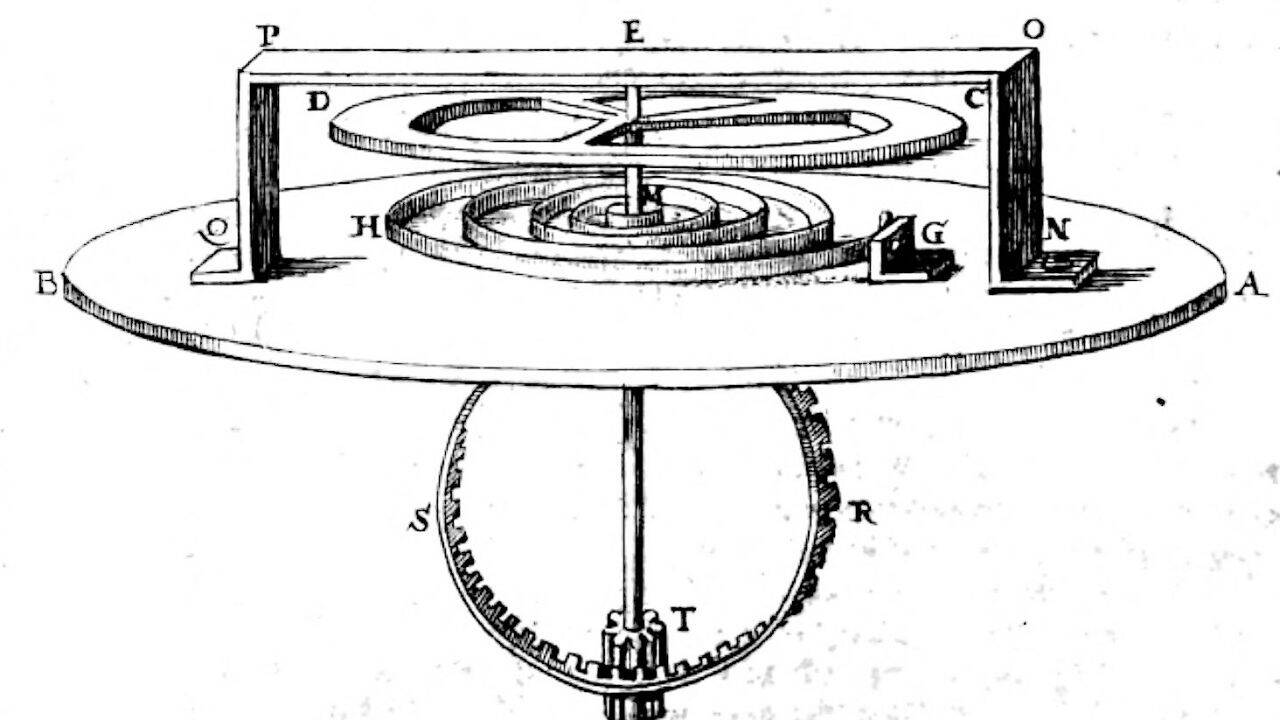
Drawing of one of his first balance springs, attached to a balance wheel, by Christiaan Huygens. Image Credit: Johann Christoph Sturm/Wikipedia
How the clock eventually changed everyday life
The clock became much more than a device for telling someone when an hour had passed. According to WorldAtlas, mechanical clocks began spreading through European cities during the early 14th century. They gradually helped synchronise work, meetings and other activities. By the 16th century, clocks had become important symbols of how institutions were organised, and time itself increasingly came to be treated as something that could be spent, saved or wasted.That’s why, the first clockmaker did not need to know the exact modern time before building a clock. Instead, that maker took an existing human understanding of time and found a way to reproduce it through machinery.
So who really set the first clock
There was never one person who suddenly decided what ‘the correct time’ should be. Timekeeping developed piece by piece. Sundials provided a connection to the Sun. Water clocks offered another way to measure passing intervals. Mechanical escapements transformed that measurement into controlled movement, while pendulums and balance wheels later made clocks increasingly precise. Therefore, clockmaking was not the invention of time, but the gradual invention of better ways to measure and share it.