








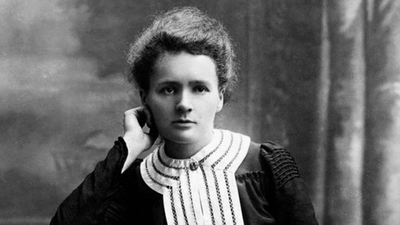
Marie Curie once offered a powerful message about self-belief, perseverance and the importance of finding a purpose in life: “We must believe that we are gifted for something, and that this thing, at whatever cost, must be attained.” Curie wrote these words in a letter to her brother Joseph on March 18, 1894, when she was still a young student in Paris and years away from the scientific breakthroughs that would make her famous. At the time, she had no Nobel Prizes to her name and no guarantee that her ambitions would succeed. Yet her words reflected a confidence in her abilities and a determination to pursue what she believed mattered. Her own life would later give the quote extraordinary weight. From studying under difficult circumstances to becoming the first woman to win a Nobel Prize and the only person to receive Nobel Prizes in two different scientific fields, Curie demonstrated how belief, perseverance and sustained effort can turn potential into achievement.
Quote of the day by Marie Curie: What does it mean?
Curie’s quote is fundamentally about self-belief, purpose and perseverance. By saying that people must believe they are gifted for something, she was encouraging individuals to recognise their abilities rather than allow doubt or difficult circumstances to define what they can achieve. But the quote does not suggest that talent alone guarantees success. The second part makes the message more demanding: once someone believes they have a purpose or ability worth pursuing, they must work towards it with determination. For Curie, confidence was not about assuming success would come easily, but about continuing to pursue a goal even when the outcome was uncertain.
Why Marie Curie’s own life gives the quote greater meaning
Curie’s life makes the message particularly powerful because she wrote these words long before she became one of the world’s most famous scientists. In 1894, she was studying in Paris and working towards establishing herself in science. She had already faced financial and educational difficulties, yet continued her studies and scientific work. She later became the first woman to receive a Nobel Prize and remains the only person to have received Nobel Prizes in two different scientific fields. Her achievements in physics and chemistry, including her pioneering work on radioactivity and the discovery of polonium and radium, demonstrate the persistence behind her words.
Curie believed perseverance mattered as much as talent
The quote does not simply celebrate natural ability. Curie placed perseverance and confidence alongside the belief that a person is gifted for something. That distinction is important because talent can remain unrealised without sustained effort. Her own scientific career involved years of difficult research, including painstaking work with radioactive materials. Her words suggest that recognising a potential strength is only the starting point. Turning that potential into an achievement requires patience, discipline and the willingness to continue when progress is slow.
The meaning of “at whatever cost”
The phrase “at whatever cost” gives the quote its strongest sense of determination. In context, Curie was not simply promising that achieving a goal would be easy. Instead, she was stressing the seriousness with which she viewed purpose and perseverance. The original French wording has also been translated as the idea that something one is gifted for must be attained “at any cost”. Read alongside the rest of her letter, the phrase reflects a willingness to endure difficulty and continue working rather than abandon an important goal when circumstances become challenging.
What the quote teaches about finding a purpose
Curie’s words also suggest that purpose does not necessarily arrive with immediate certainty. People may discover their strengths gradually through education, work, experimentation and failure. The important step is to pay attention to what genuinely interests them and where their abilities can be developed. Once a meaningful direction becomes clearer, persistence becomes essential. Curie’s own journey from a young student in Paris to a pioneering scientist illustrates how a long-term purpose can develop through years of learning and sustained effort rather than appearing fully formed at the beginning.
Why Marie Curie’s quote still relevant today
The message remains relevant because self-doubt and uncertainty are not limited to any particular generation or profession. Students, researchers, entrepreneurs, artists and professionals can all face periods when their abilities are questioned or their goals appear difficult to reach. Curie’s advice is to combine confidence with action. Believing that one has something meaningful to contribute does not guarantee success, but it can provide the motivation to keep developing that ability. Her words ultimately encourage people to recognise their potential, choose a meaningful direction and remain persistent enough to discover how far that potential can take them.
Who was Marie Curie?
Marie Curie was a Polish-born physicist and chemist whose research transformed the scientific understanding of radioactivity. She shared the 1903 Nobel Prize in Physics with Pierre Curie and Henri Becquerel and received the 1911 Nobel Prize in Chemistry for her work on radium and polonium. She was the first woman to receive a Nobel Prize and remains an exceptional figure in the history of science. Her scientific achievements, combined with the difficulties she faced early in her career, give particular weight to her belief that confidence and perseverance are essential to achieving one’s purpose.