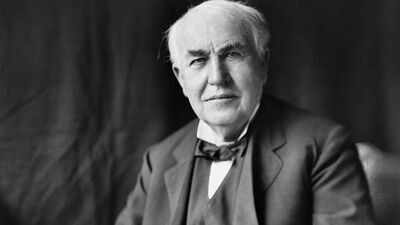





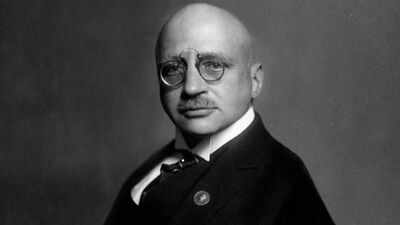
Fritz Haber: The Nobel Prize winner who fed billions and killed millions with one revolutionary discovery |

In the closing years of the 19th century, German chemistry was moving between lecture theatres, factory floors, and military laboratories with an ease that feels strange in hindsight. Fritz Haber entered that world as someone who never quite settled into a single direction, drifting between academic curiosity and industrial usefulness. His work would end up…
Read More

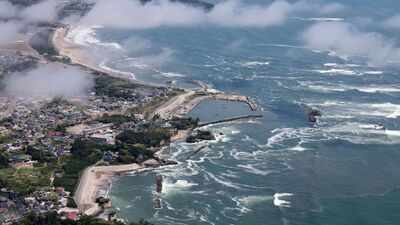
Nasa satellite captures mega tsunami after 8.8 Kamchatka earthquake in the Pacific Ocean: Scientists reveal shocking details |

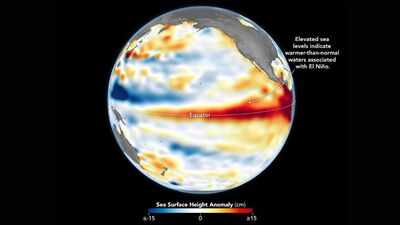
When the Pacific Ocean carried the effects of a powerful earthquake away from Russia’s far eastern coast in late July, most attention focused on the tsunami warnings issued across the region. Less visible was an unusual scientific opportunity unfolding hundreds of kilometres above the waves. By chance, a satellite designed to monitor Earth’s water systems…

Read More

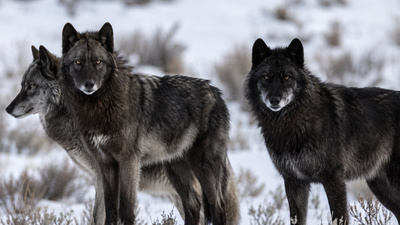
Did wolves really save Yellowstone? New research challenges one of conservation’s biggest success stories |

In 1995, Yellowstone National Park became the centre of a conservation experiment that would later be celebrated across the world. Fourteen grey wolves were reintroduced after an absence of nearly 70 years, with many ecologists crediting their return for triggering a remarkable ecological recovery. The story became a textbook example of a “trophic cascade”, where…

Read More

Quote of the day by renowned quantum physicist Niels Bohr: “An expert is a person who has made all the mistakes that…” |

Niels Bohr, one of the most influential physicists of the 20th century, is remembered not only for his groundbreaking contributions to quantum theory but also for his insightful observations about learning and expertise. Among his most quoted remarks is: “An expert is a person who has made all the mistakes that can be made in…

Read More

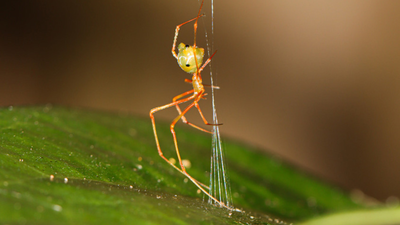
The ‘ballista spider’: Scientists discover a tiny spider that launches ants with 140 times the force of gravity |

Deep in the rainforests of far north Queensland, Australia, scientists have discovered a tiny spider with an extraordinary hunting strategy. Nicknamed the “ballista spider”, the newly described species uses a silk-powered trap that launches prey into its web with accelerations reaching up to 140 times the force of gravity. Researchers say the spider specifically targets…

Read More

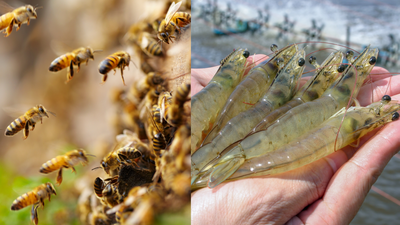
Why scientists are vaccinating honeybees and shrimp for the first time |

People, pets and livestock have long been protected through vaccines, but scientists are now extending that approach to creatures once thought impossible to immunise. Researchers have already developed the world’s first vaccine for honeybees and are testing similar technology in shrimp, despite the fact that these animals lack the antibody-based immune systems that conventional vaccines…

Read More