







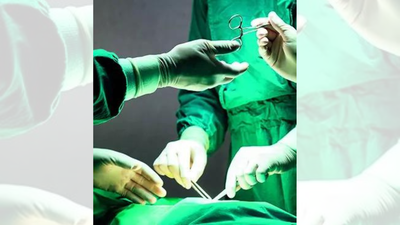
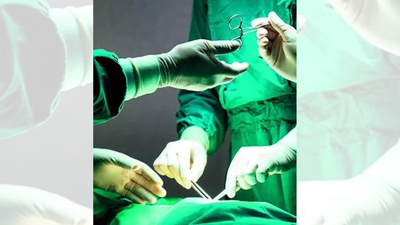
For a 19-year-old battling testicular cancer, survival was only one part of the fight. The other was far more personal.After surgeons removed his only remaining testis, a team of 10 specialists at Mumbai’s Sir H N Reliance Foundation Hospital came together on July 25, 2026 with a singular mission — to comb through the nearly dead organ to finding any surviving sperms.While the surgery to remove the testis was lifesaving, it threatened to end the teenager’s (his identity has been withheld on family’s request) chance of becoming a biological father.The odds that the team of surgeons, urologists, andrologists, fertility specialists and embryologists would find any surviving sperms in the surgically removed testis were daunting. But after hours of meticulous search, there was success — they found 23 viable sperms. The cells were frozen and preserved for future use. What had begun as an attempt to save a life, ended with the hope of a new one taking birth sometime in the future.A childhood conditionThe teen’s medical journey had begun long before his cancer diagnosis. He was born with cryptorchidism (undescended testes) — a condition in which both testes fail to descend into the scrotum before birth and remain inside the abdomen.Since the testes require a cooler environment for normal sperm production, the condition can impair fertility and is also associated with an increased risk of testicular cancer.When he was just a year old, he underwent orchiopexy, a procedure to bring the testes into the scrotum. However, one testis had already sustained irreversible damage and had to be removed. The other was successfully brought down into the scrotum.Some years later, this surviving testis developed swelling. Investigations revealed a large tumour that had affected nearly 95% of the organ. Removing the cancerous testis became essential to save his life. But for the teenager, the surgery carried a devastating consequence — it would permanently end his body’s ability to produce sperms. “His case was extremely challenging. We wanted to explore every possible option to preserve his fertility and give him a chance of biological fatherhood,” said Dr Firuza Parikh, director of IVF at Well Women and Men’s Centre, Sir H N Reliance Foundation Hospital.When every routine option failedBefore the surgery, the patient provided two semen samples. Both were analysed using an advanced AI-assisted sperm detection system.“We have the latest technology to search for sperm in cryptozoospermia — a condition in which sperm are present in extremely low numbers and may not be detected during routine semen analysis, requiring microscopic examination to find them. The technology, the first of its kind in India, was developed in collaboration with the AZ-VUB IVF team in Belgium,” Dr Parikh explained.Yet, despite the advanced analysis, the results brought heartbreaking news — not a single sperm could be located in the two samples. This medical condition is called azoospermia, meaning a person ejaculates a normal-looking fluid, but the fluid contains zero sperm cells.“This was a major setback for us, the family was devastated… now the only option left was to attempt Onco-TESE (oncological testicular sperm extraction) — a specialised fertility preservation technique used in cancer patients,” she said.The team decided to attempt a rare “ex-vivo Onco-TESE”, a procedure in which sperm retrieval is performed after the cancer-affected testis has been surgically removed. The organ is examined outside the body in a controlled laboratory environment to identify any surviving sperm-producing tissue untouched by the tumour.A race against the clockOn July 25, surgical oncologists Dr Raman Deshpande and Dr Soumil Vyas removed the cancer-affected testis. Now, the team had just five to six hours to locate and extract the sperms.A team led by consultant andrologists Dr Rupin Shah and Dr Himanshu Gohil dissected small pieces of tissue surrounding the tumour in search of any surviving tissue. The doctors relied on ultrasound and MRI scans to guide them towards the tiny regions that might still contain viable tissue.These healthy tissues were then sent to the hospital’s IVF laboratory. “Healthy tissue fractions were carefully separated. Once the required tissue fractions were identified, they were placed in a specialised sterile transport medium to maintain tissue viability and preserve any potential viable sperm cells. Prompt processing is critical, as it provides the best chance of preserving any surviving sperm cells.”Embryologists led by Dr Varsha Kuril spent five hours going through the tissues for signs of surviving sperms. When the team identified the first viable sperm cell, they knew they were onto a special moment in medical history. By the time they were done, the team had identified 23 sperms, which were then cryopreserved.Twenty-three shots at fatherhood“Twenty-three may sound like a disappointingly small number in the world of sperm counts, where a healthy male can produce millions of sperm cells. But in this case, every single one was a victory — each cell represented a possibility that cancer had nearly taken away,” said Dr Parikh, adding that doctors “will wait for the time when this young boy gets married and wishes to have children.
Share your thoughts in the comments
Be respectful · TOI community guidelines
Then the sperm will be thawed and used for IVF.”According to Dr Tarang Gianchandani, chief executive officer of the hospital, the procedure marked a significant milestone for the institution. “We have been freezing eggs and ovarian tissue in women with cancer for a long time, but this was the first time that we could get testicular tissue from a testis that was almost entirely destroyed by cancer. And we succeeded only because of our team’s efforts,” she said.