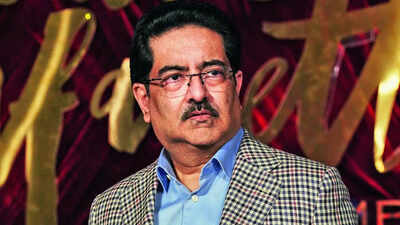









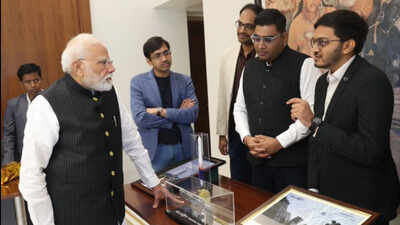
NEW DELHI: PM Narendra Modi on Friday interacted with chief executive officers (CEOs) and founders of 20 space startups, including India’s leading companies Skyroot Aerospace, Agnikul Cosmos, Pixxel, Dhruva Space, GalaxEye, PierSight, Bellatrix Aerospace, and Digantara, in New Delhi. During the interaction, the PM called for wider applications of space technology to improve the lives of people.Emphasizing greater collaboration between space industry and other social development sectors, Modi encouraged greater collaboration with Atal Tinkering Labs to nurture curiosity and interest among young minds for space. Posting on X, the PM said, “It was wonderful to meet the yuva urja of India’s space sector…young entrepreneurs and innovators who have shown remarkable courage by entering a new and demanding domain. They have taken risks, trusted the reform process and remained consistent in their efforts. Due to this, India has achieved a lot in the space sector in the last few years. I also urged the startups to think about how space technology can contribute immensely to agriculture, livestock management, dairy, environment and many other areas that touch everyday lives. Our private space ecosystem can become a major force for India and for the world!”Speaking at a business conclave on Friday, space regulator and promoter INSPACe chairman Vivek Goenka said, “India is set to enter the phase of the commercial ramping up as we are hoping growth in the space sector from $8 billion to $44 billion by 2033. Of the $44 billion, $11 billion is expected to come from foreign customers.”Pointing out 450 space startups, 20 have matured to ramp up the commercial phase. “Skyroot’s order book is booked for 2-3 years, Agnikul is the first company in India that is working on a reusable rocket, Pixxel is building a constellation of earth observation satellites under IN-SPACe public-private partnership, Digantara is working on end-to-end space situational awareness (SSA) and space domain awareness (SDA) infrastructure and an Indian company is working on the refuelling system. These space startups have Rs 10-20 crore business, which is growing at a rate of 2x and 3x.”He highlighted three growth engines: govt demand as an anchor customer, wider adoption of space technology across agriculture, defence, mining, fisheries, weather forecasting, automotive, and lastly stronger international market access. He also said the defence sector is the biggest customer as it has ordered 31 dedicated military surveillance satellites to be built by domestic private sector companies, while Isro will manufacture an additional 21 satellites.